You get your audition sides at 6 PM. The callback is tomorrow morning.
You read the script once. Twice. Five times.
By midnight, nothing’s sticking.
Sound familiar?
If memorising lines feels harder than it should, the problem isn’t your memory...it’s your method. Most actors rely on passive reading, but research shows it’s one of the least effective ways to learn.
There’s a better way: active recall.
Studies show that actors who use active recall retain 57% of their material, while those who rely on passive reading retain just 29%.

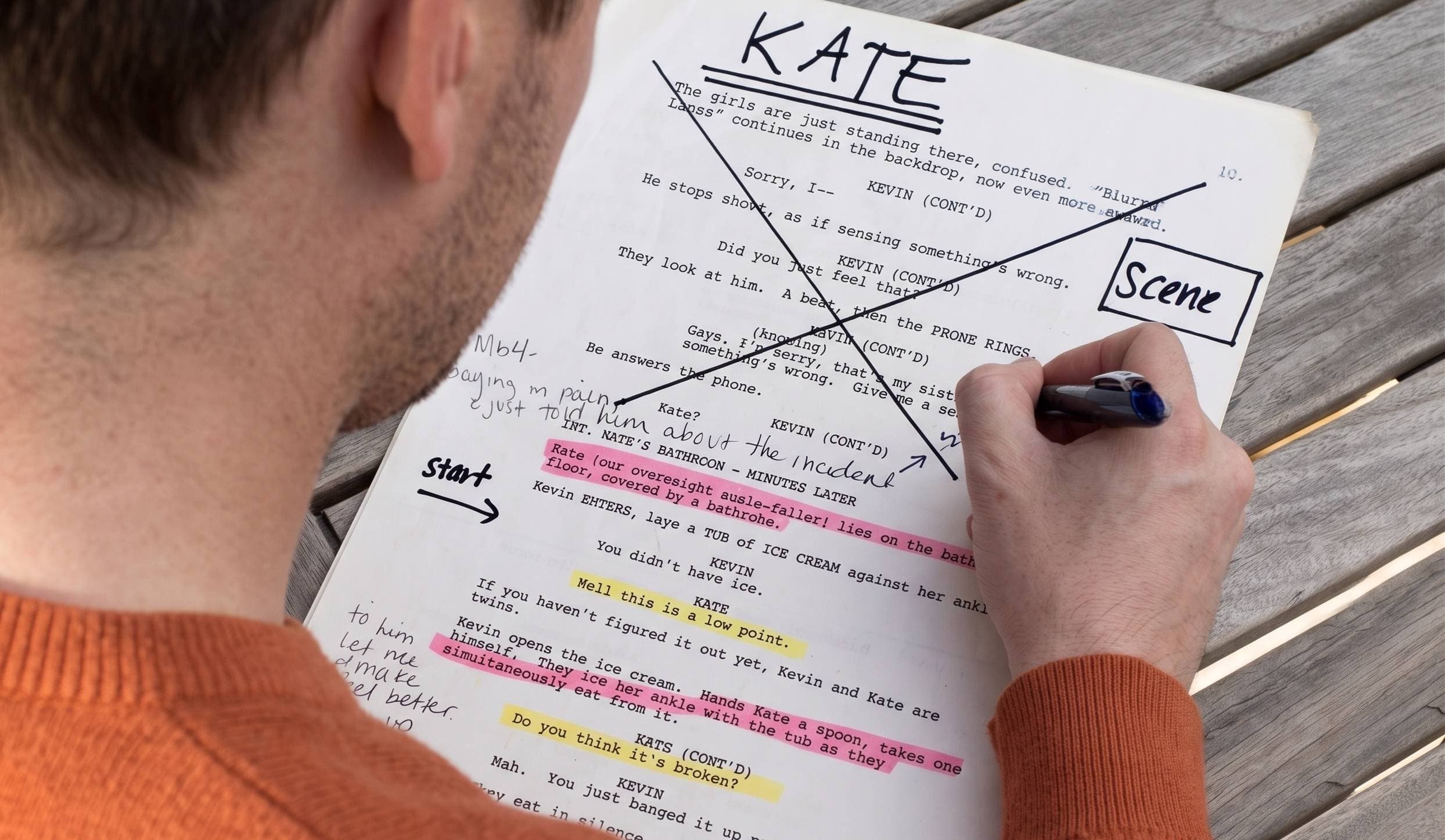
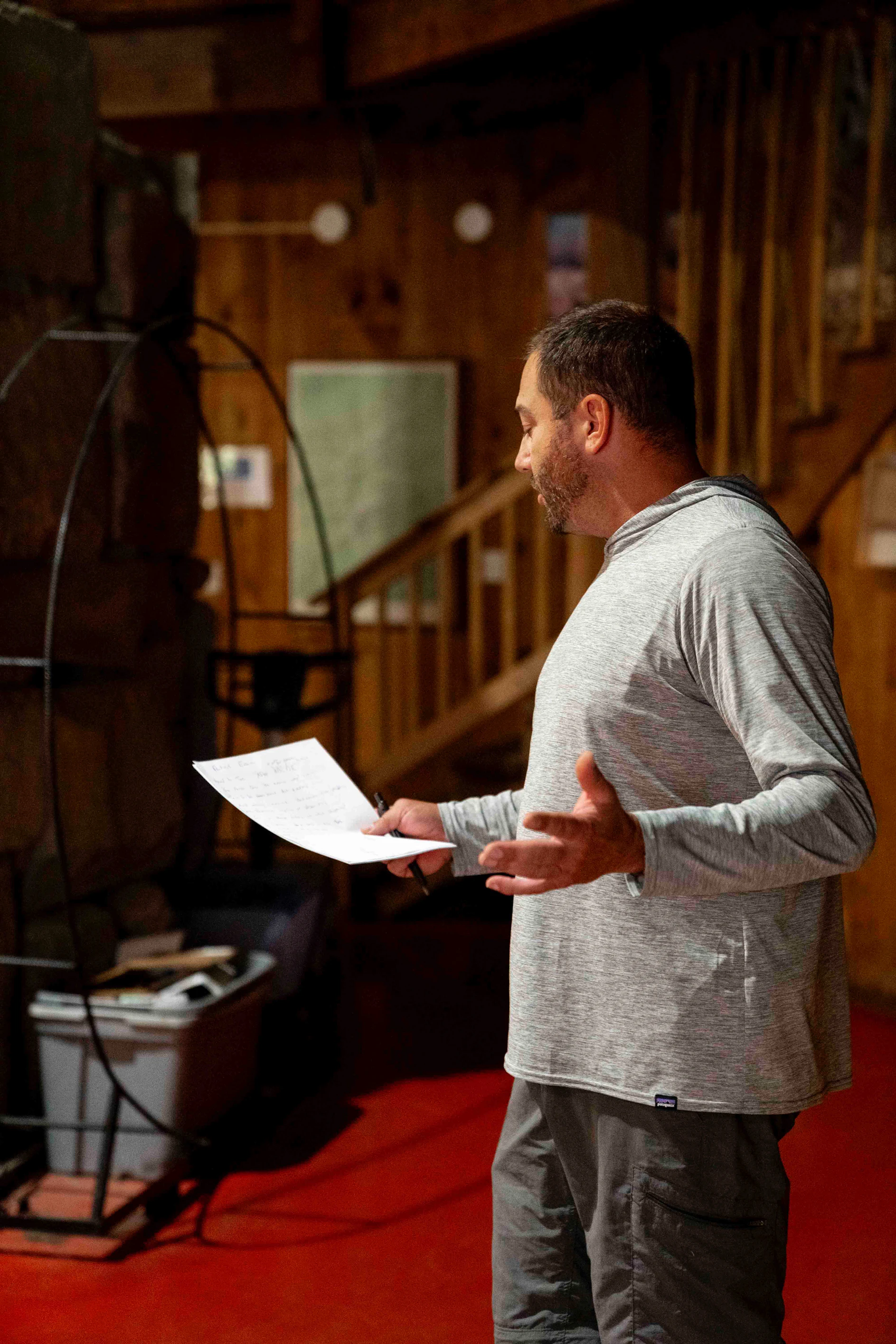
Photo by Green Chameleon on Unsplash
Let's explore why active recall beats reading every single time, and how you can use this science-backed technique to memorise your lines faster and perform with confidence.
The Problem with Passive Reading
Research from Hermann Ebbinghaus's groundbreaking memory studies shows that within 24 hours of reading new information, we forget 70% of it. Within one week, that number jumps to 90%. This phenomenon, known as the forgetting curve, explains why reading your script ten times the night before an audition leaves you scrambling on set.
Passive reading creates what psychologists call "the illusion of familiarity." Your eyes scan the words, you recognize the dialogue, and your brain tricks you into thinking you know it. But recognition is not recall. When you're standing in the audition room without your script, recognition doesn't help you. You need retrieval, and that requires a completely different approach.
Traditional methods like highlighting lines, reading aloud repeatedly, or listening to recordings all fall into the passive reading trap. They feel productive because you're engaging with the material, but they don't force your brain to do the hard work of pulling information from memory. And that hard work is exactly what creates lasting retention.
What Is Active Recall?
Active recall is the practice of retrieving information from memory without looking at your source material. Instead of reading your line for the tenth time, you close the script and force yourself to remember it. It sounds simple, but this single shift transforms how your brain processes and stores information.
Active recall means forcing yourself to remember your lines without looking.
Instead of rereading:
That retrieval process strengthens memory far more than passive review. It feels harder, because it works.
Cognitive psychologists call this "desirable difficulty." The mental effort required to retrieve information is precisely what makes that information stick. When you struggle to remember a line and then successfully recall it, you've just strengthened that memory pathway. When you simply read it again, you've done nothing to improve your ability to retrieve it under pressure.
The Science: Active Recall vs Passive Reading
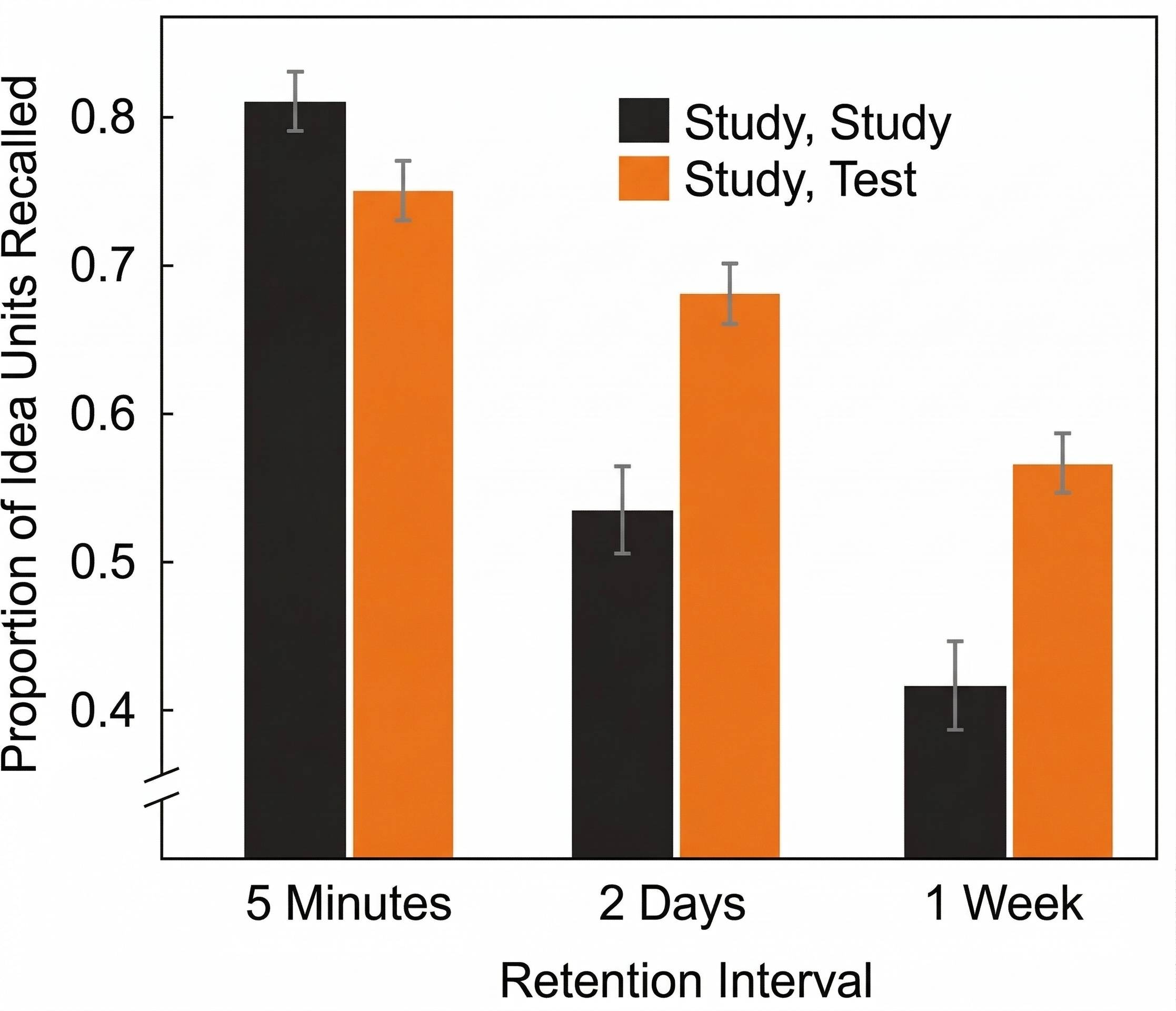
Studies consistently show that active recall outperforms passive reading by significant margins. Research published in academic journals reveals that students using active recall retain 57% of material compared to just 29% for those using passive reading methods. That's nearly twice the retention for the same amount of study time.
A comprehensive 2014 meta-analysis by Rowland examined the testing effect across multiple studies and found a medium to large effect size, meaning approximately 50% improvement in retention when using active testing compared to restudying. Even more impressive, studies with retention intervals of 24 hours or longer showed effect sizes of 69%, meaning active recall becomes even more effective over time.
More recent research confirms these findings. A 2024 study of 500 college students found that those using active recall techniques scored 23% higher on final exams than their peers who relied on re-reading. Another study tracking retention over one week found that active recall users remembered 80% of material after seven days, while passive reading students retained just 36%.
For actors working under tight deadlines, this data is game-changing. If you have 24 hours to memorise sides, active recall can help you retain more than twice as much material in the same amount of time.
The Testing Effect: Why Retrieval Strengthens Memory
Groundbreaking research by cognitive psychologists Karpicke and Roediger in 2006 and 2008 established what's now known as the testing effect: the act of retrieving information dramatically enhances long-term retention. Their studies showed that material practiced through testing is retained far better than material that's simply restudied, even when students spend the same amount of time on both activities.
But why does testing yourself work so much better than reviewing your material? The answer lies in how your brain consolidates memories. When you retrieve information from memory, you activate the hippocampus and prefrontal cortex, regions responsible for memory formation and integration. This retrieval process triggers neurochemical changes that strengthen the synaptic connections between neurons, essentially rewiring your brain to make that information more accessible.
In practical terms, this means that every time you successfully recall a line without looking at your script, you're literally making it easier for your brain to access that line in the future.
This is why running lines with a scene partner is more effective than reading alone. Your scene partner gives you the cue, and you have to retrieve your line from memory. That retrieval process is doing the heavy lifting of memorisation, not the repetition itself.
How to Memorise Lines Faster (Step-by-Step)
Applying active recall to script work requires a strategic approach. The goal is to force retrieval without making the task so difficult that you get discouraged. Here's a practical method that leverages the science while respecting the unique demands of acting.
Step 1: Read Through Once for Context
Start with a single read-through. Focus on:
Don’t try to memorise yet.
Step 2: Test Yourself Immediately
Close the script and try to recall.
Break the scene into small chunks (3–5 lines):
Read once
Cover
Recall
Check
Repeat until you hit ~80% accuracy.
Step 3: Use Spaced Repetition
The forgetting curve is steepest in the first 24 hours, which means your first review sessions should be closely spaced. After your initial learning session, test yourself again after one hour. Then test again after four hours. Then before bed. Then first thing in the morning.
Don’t cram...space your recall sessions:
After 1 hour
After a few hours
Before bed
Next morning
Each recall strengthens memory and slows forgetting.
Step 4: Practice like you will perform
Once you know the lines:
Walk the text
Walking the text is an acting technique where you memorise lines by pairing speech with movement. Walk continuously as you speak, keep moving through commas, and on a full stop, stop, change direction, then continue. This links the structure of the text to your body, improving recall and making delivery feel more natural.
Simulate performance conditions to make your recall more reliable when you are under pressure.
The old adage 'train the way you play' is real, and applies here.
Active Recall vs Reading: The Real Difference
Spaced repetition isn't just about repeating information; it's about repeating it at strategically increasing intervals. Research in the Journal of Experimental Psychology found that participants using spaced repetition achieved 80% recall accuracy compared to 60% for those who crammed their practice into a single session.
For actors, optimal spacing might look like this:
initial learning session
Review after 1 hour
Review after 4 hours
Review after 1 day
Review after 3 days.
If you're working with a script over several weeks of rehearsal, these intervals can expand to weekly reviews.
The key is to review just as you're about to forget. That moment of difficulty, when you have to search your memory to find the information, is when the most powerful learning occurs.
Why Active Recall Works for Actors Under Pressure
Active recall doesn't just help you memorise faster; it creates the kind of memory that performs under pressure. When you're in an audition room with casting directors watching, your stress response can make it harder to access memories that aren't deeply encoded. Active recall builds retrieval strength, not just storage strength.
Professional actors often talk about lines becoming "muscle memory," but what they're really describing is deeply consolidated procedural memory created through repeated retrieval. The lines aren't just stored in your brain; they're integrated into your performance in a way that passive reading can never achieve.
Common Objections (And Why They're Wrong)
"I don't have time to test myself. I need to memorise these sides by tomorrow."
This is exactly when you most need active recall. When time is limited, efficiency matters. Spending two hours on active recall will give you better retention than spending four hours on passive reading. The research is clear: you'll remember more of what you learn, and you'll remember it more reliably under pressure.
"Active recall feels harder and slower than just reading."
Yes, it does. That's the point. The difficulty is what makes it effective. Passive reading feels easy because your brain isn't doing much work, which means you're not creating strong memories. Active recall feels hard because your brain is building robust neural pathways. Embrace the difficulty.
"I need to understand my character and objectives first, not just memorise lines."
Absolutely true, and active recall doesn't contradict this. You should always start with a full read-through for context and character analysis. But once you understand the scene, active recall is the most efficient way to get the words into your memory so you can focus on bringing those words to life.
How can you practice active recall?
The next time you get sides for an audition, after you read the script a few times, understand the world you are in, and your character...close the script and test yourself.
Use spaced repetition to review at increasing intervals. Practice retrieval under performance conditions. Your brain will thank you, your confidence will soar, and your retention will speak for itself.
If you're looking for a tool that puts active recall into practice, Linus is built on this exact principle. Instead of showing you your lines to read repeatedly, Linus waits for you to speak them.
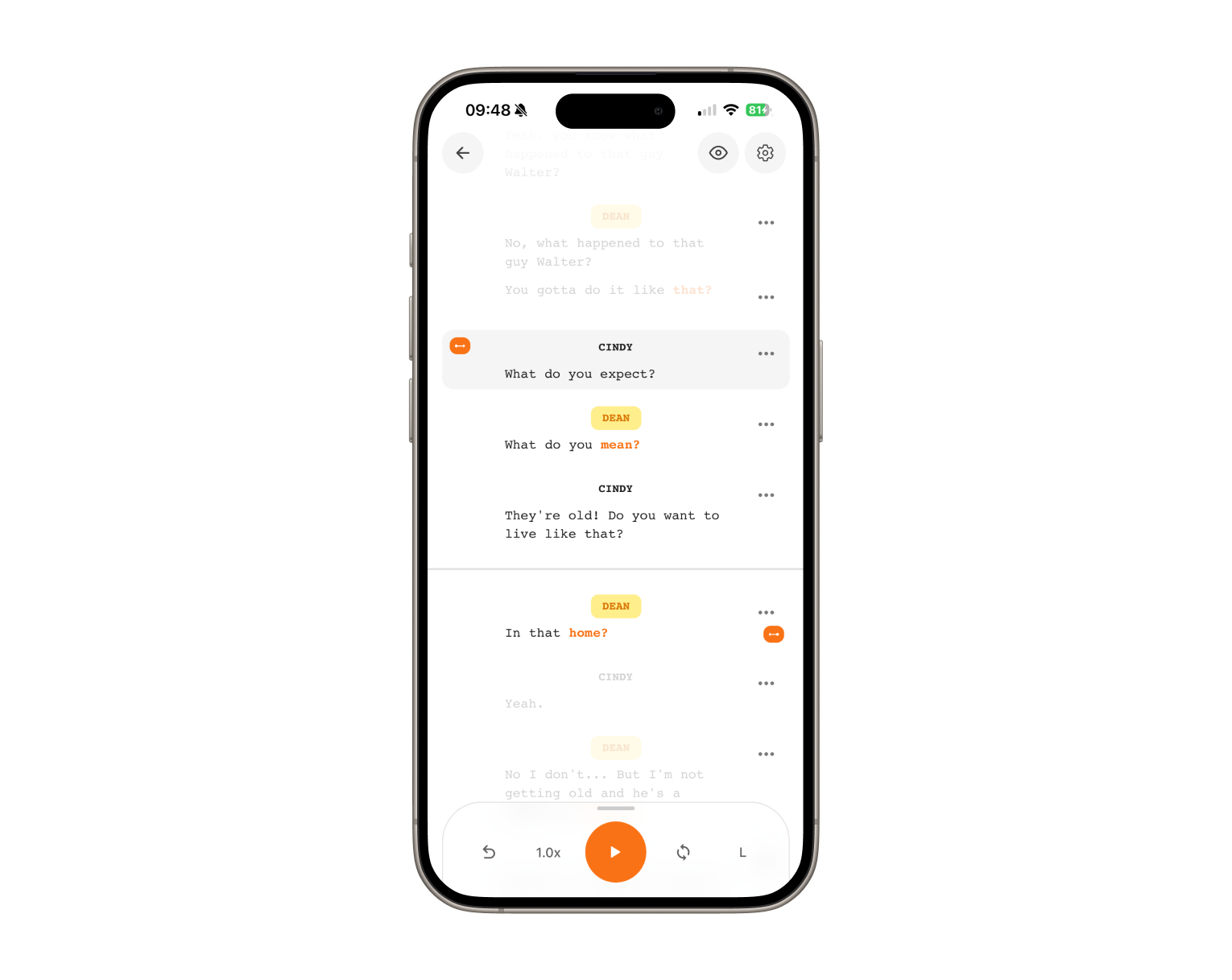
It forces retrieval with every line, building the kind of deep, performance-ready memory that cognitive psychology research proves is most effective. Give your brain what it needs to learn efficiently, and you'll be amazed at how much faster you can master your material.