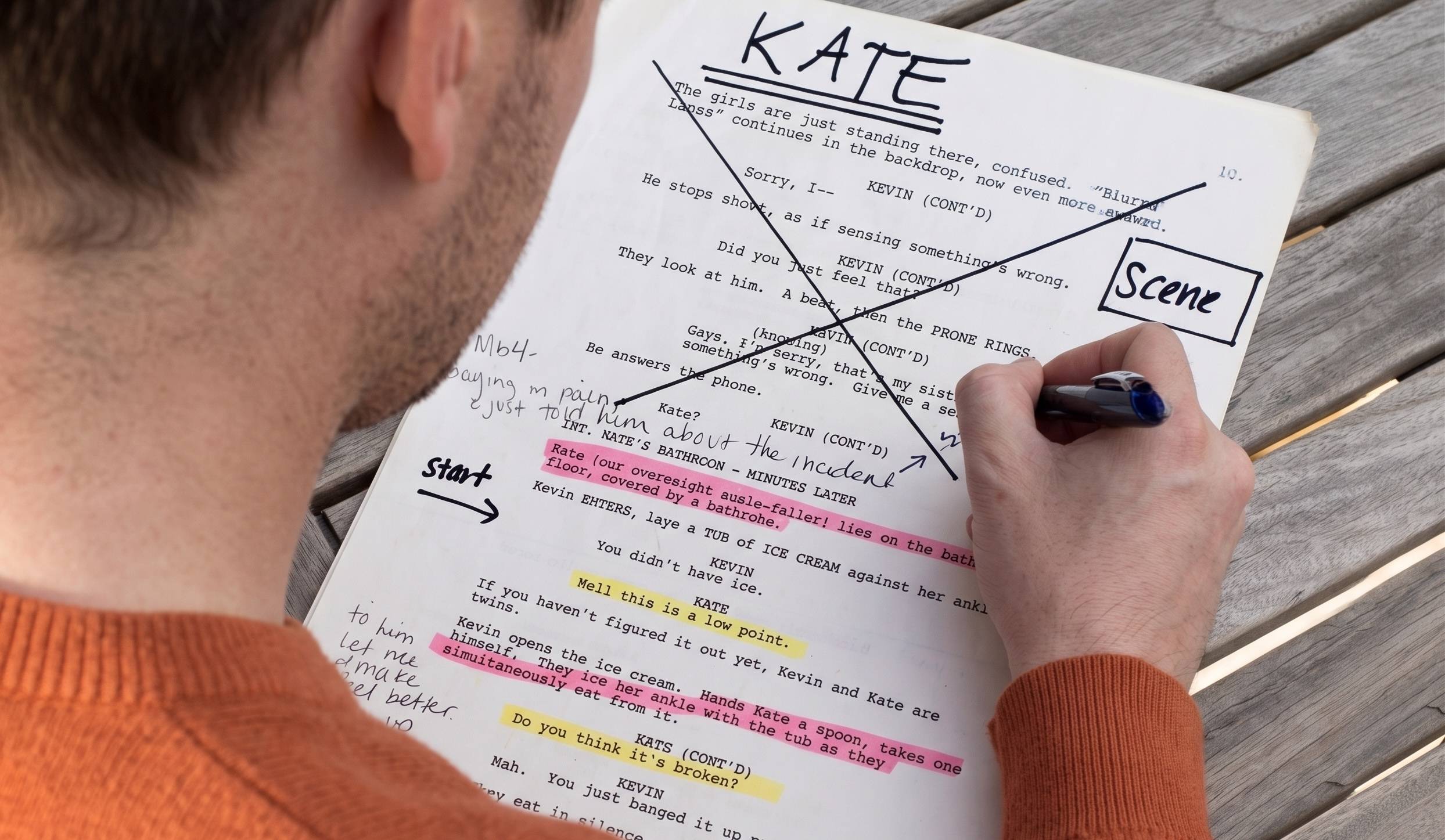
Got sides at 5 PM for a 10 AM callback? Here's a plan to make you feel prepared, just in time.
Last-minute auditions are the norm in film and TV. The actors who book aren't necessarily more talented, they're just better at managing time pressure. Here's how to use the time you have.
Hour 1: First Read
Download everything: sides, character breakdowns, submission instructions. Do a complete read-through, but don't try to memorise anything yet. Read for story and character: who is this person, what do they want, what's the relationship to the other character? Do they remind you of anybody you know?
End the hour by reading your lines aloud. Notice where your tongue trips. Those are the lines you'll come back to.
Hour 2: Top-level Research and Character Work
Look up the project. If it's a series, watch a clip to understand the tone. If it's a film, spend five minutes on the director's previous work.
Then answer these questions in writing:
What does my character want in this scene?
Why do they want it?
What's stopping them?
What happens if they fail?
What's my relationship to the other character(s)?
Then, find the one point in the scene where there is a clear energetic shift. This will help you create dynamics, quickly.
This is going to sound ridiculous, but it's some of the best audition advice I have ever received: if you are an apple, better to be the best apple you can be. If the role is a banana, you're much better off submitting you, the 'apple', and letting casting realise 'hey actually we should have cast an apple'. Otherwise they are going to look at your tape and see an apple dressing up as a banana. and that won't work.
Hour 3: Active Memorisation
Don't just read the lines over and over. That approach produces only 29% retention. Active recall nearly doubles it.
Break the sides into sections of 3–5 lines. Read one section, close the script, and say the lines aloud from memory. Note what sticks and what doesn't. Check yourself, correct any mistakes, and test again. Only move on once you can recall the section with about 80% accuracy.
The struggle is the learning. It's time consuming, and it's tricky. You are literally re-wiring your brain. By the end of this hour, you should have tested yourself on every section at least twice.
Hour 4: Spaced Review
Take a break. Eat something. Your brain needs downtime to consolidate what you just learned.
Then, run the full scene from memory without checking the script first. Note where you stumble, then drill those specific lines. You should feel noticeably more confident than an hour ago.
Hour 5: Practice Under Performance Conditions
Set up your self-tape or practice in the space you'll use. Run the scene 3–5 times at full commitment.
Record yourself at least once and watch it back. Take note of where you stumble, if anywhere, and how it feels.
Hour 6: Final Review and Sleep
I had an acting teacher once tell me that he would learn his lines by visualising them just before he went to bed. Try this. Just before you go to sleep, do a complete run of the scene, from memory. Note where you get stuck, and be patient with yourself in that moment, see if you can stay there, with that line, until you remember how it is that the scene moves forward.
Then, sleep! Staying up to cram impairs recall by 20–40%. Ever heard of anyone saying "Just REM it"? Rest is part of the preparation.
Morning Of
Do the same exercise that you did just before bed, first thing in the morning. Lay there, eyes closed, and play out the whole scene. This is actually surprisingly effective. There was a famous study called the "power of visualisation" done where participants who were asked to visualise practicing their basketball free-throw improved just as much as those who practiced for real. This is staggering - and very applicable to you. Visualise the scene. If you are doing a self tape, visualise how you will tape it with your reader. if it's in person, visualise how you will feel.
The Final 15 Minutes
Take 60 seconds for breath work: inhale for four counts, hold for four, exhale for four. Repeat four times. This settles your nervous system so you walk in as the prepared actor you actually are.
The Bottom Line
Focused hours of active preparation beats two weeks of casual, passive review. You can't control the short notice. You can control how you use the time you have: retrieval practice for memorisation, specific character choices, and practice under real performance conditions. Everything else is secondary.