Learning lines quickly is a skill every actor needs. Whether you have 24 hours for an audition or you're juggling multiple roles, efficient memorisation can make or break your performance. The good news? Line learning isn't about having a "good memory"...it's about using techniques that work with how your brain actually learns.
Key Takeaways
Test yourself instead of re-reading: active recall increases retention by 50%
Spaced repetition over days beats cramming: your brain consolidates memories during sleep
Understand your character's objective before memorising: context creates stronger neural pathways
Writing by hand produces 50% stronger memory retention than typing
1. Use Spaced Repetition and Active Recall
The principle: review lines multiple times over days with increasing intervals. Your brain consolidates memories during sleep, so spreading practice creates stronger neural pathways than marathon sessions.
Here's the key difference: don't just re-read...test yourself. Research shows active recall (retrieving lines from memory) increases retention by 50% compared to passive reading. Start with your script, then put it down and force yourself to recall each line. When you get stuck, check the script, then test yourself again.
Run lines twice on day one (morning and evening), twice on day two, once on day three, and work on your lines right before bed sleep consolidation transforms short-term memory into long-term storage. Even 10-15 minutes of focused testing beats a two-hour reading session.

2. Walk the Text Using Classical Speech Techniques
Walking the text is a classical technique from Shakespearean training that's powerful for any monologue or longer passage. The method: walk while speaking, pausing or changing direction only at punctuation marks (commas, periods, semicolons, question marks).
This engages kinesthetic memory as your body remembers lines through movement, creating multiple memory anchors. The punctuation becomes physical, revealing natural breath points and your character's thought patterns. When nerves hit during performance, muscle memory can trigger the words.
How to try it
Walk until you hit a comma, then pause....continue to the full stop. Then stop, change directions, and start again. Repeat until the rhythm becomes automatic. This works for both classical text and contemporary dialogue. (For more on walking with punctuation, see this resource from Theater for a New Audience.)
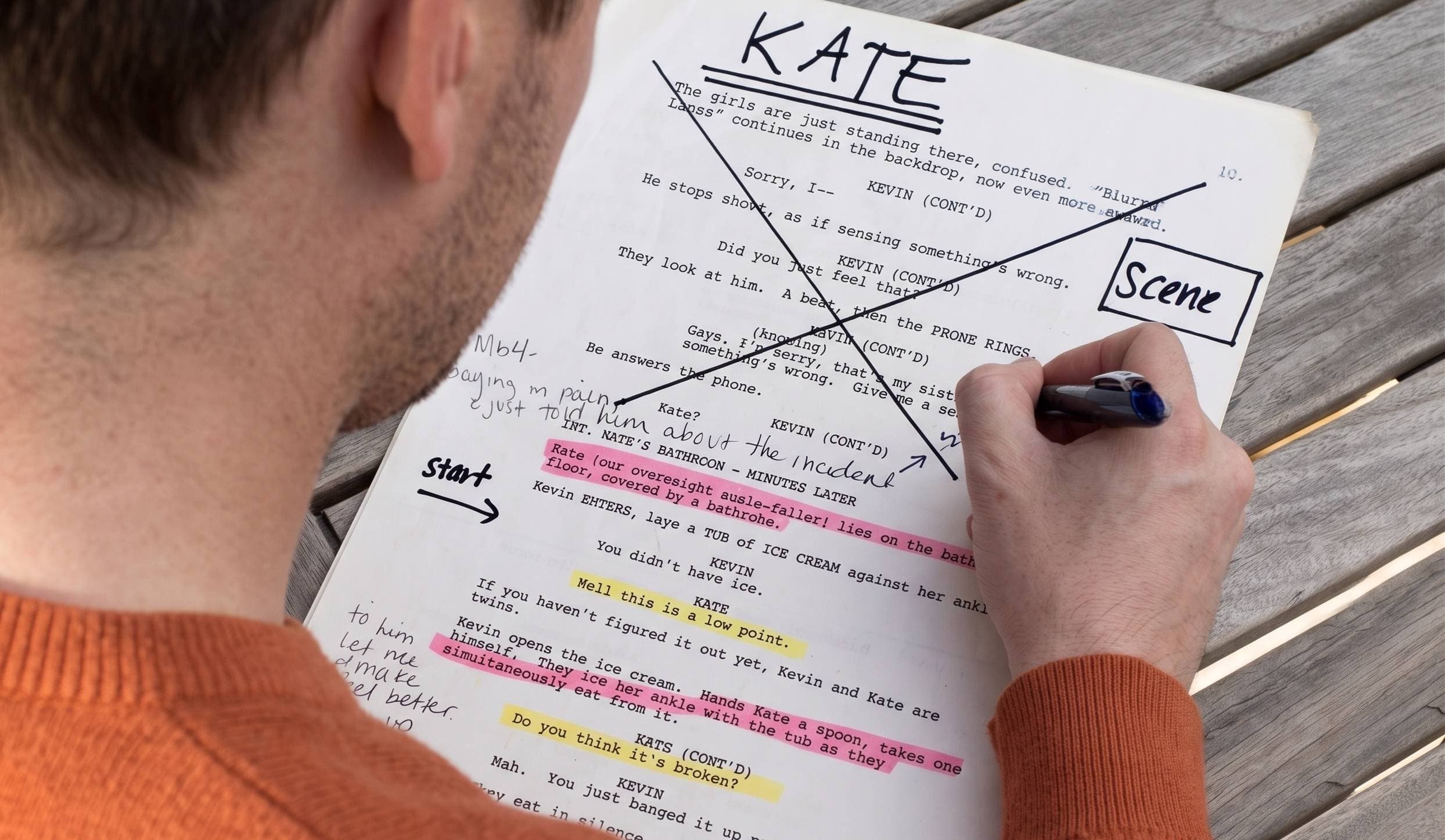
3. Write Your Lines Out by Hand
Neuroscience research shows handwriting produces 50% stronger memory retention than typing. When you write by hand, your brain engages visual, motor, and cognitive systems simultaneously. The motor complexity of hand movements creates neural connectivity patterns that typing can't match.
Write your scene two or three times. Don't copy mindlessly: engage with the meaning. Some actors write only their lines first, then add cue lines. Others write the full exchange to understand conversation flow.
Combine this with spaced repetition: write on day one, again on day two. By day three, try writing from memory without looking. The act of retrieval (not copying) solidifies learning.
4. Work Backwards from the End
Most actors over-rehearse the beginning and under-prepare the end. Working backwards fixes this imbalance. Start with the last line, then add the second-to-last, working your way to the beginning.
The psychological benefit: you're always moving toward material you know, building confidence instead of anxiety. Working forward means approaching unknown territory. Working backward means heading toward familiar ground. When you finally run the scene top to bottom, the ending, often the most critical moment, will be the strongest part of your memory.
5. Use a Line Learning App for Consistent Daily Repetition
Line learning apps can cut your rote-learning time by up to 40%. Turn screen time into productive repetition during commutes, lunch breaks, or before bed. Apps make it easy to maintain the spaced repetition schedule that's crucial for memorisation.
Look for newer apps that wait for you to finish your line before they speak, as this will give you the best chance at actively recalling your line, and learning the thinking process of your character.
The best apps offer hands-free voice recognition which is useful while walking or exercising.
6. Understand Character Objectives, Then Break into Beats
Drama schools like Juilliard and RADA require script analysis before memorisation—and there's a reason. When you understand what your character wants, your brain memorises needs instead of words. Lines connected to intentions are easier to recall than arbitrary text.
Start by analysing the scene. What does your character want? Then break it into beats—shifts in tactic or emotion. Maybe beat one is asking for forgiveness, beat two is defending actions, beat three is threatening consequences. These divisions reflect how people actually think.
Memorise one beat at a time, understanding why each exists. Cognitive psychology shows most people can hold about 7 chunks of information in short-term memory. Breaking overwhelming dialogue into meaningful units tied to objectives transforms memorisation from rote recital into lived behaviour. Your memory becomes more robust because it's grounded in character logic, not just word sequences.
7. Listen to the scene on Loop
Actor Terry Crews uses this method, listening on loop even while exercising. The passive repetition sinks into your subconscious without active effort.
Leave space after cue lines so you can speak your lines aloud while listening. This creates an interactive prompt-and-response experience. Gradually shorten the pauses to force faster recall. Some actors do this in many ways: all lines spoken, only cue lines, and just pauses for testing.
The beauty: it uses time you'd spend on autopilot: commuting, cooking, cleaning. Your brain processes and reinforces lines even when you're not consciously focused. Combined with active techniques like writing or walking, audio repetition creates multiple pathways to the same material.
Use a Line Learning App to Get More Repetition
The difference between actors who struggle with lines and those who have them cold comes down to consistent repetition throughout each day—not marathon cram sessions.
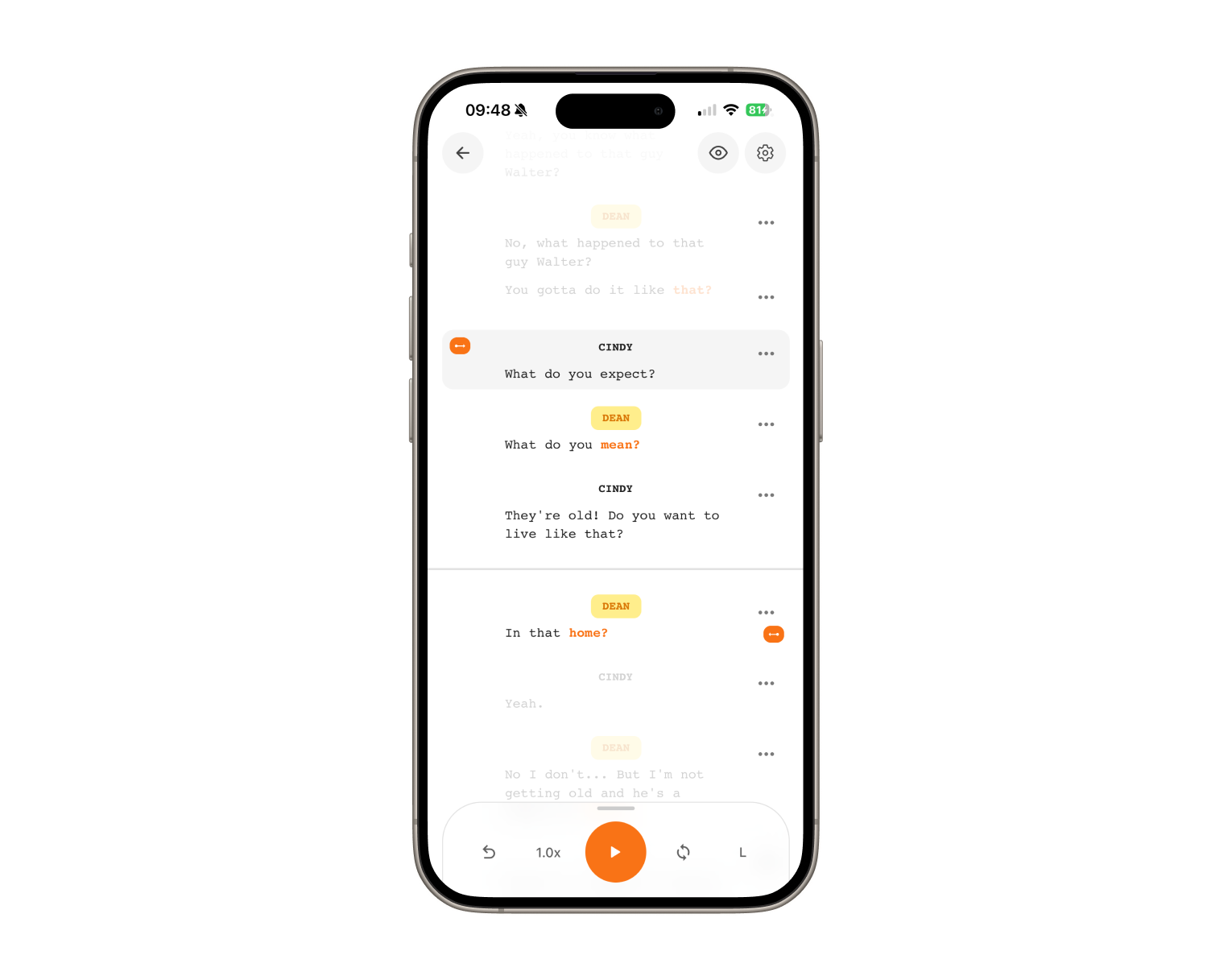
Linus is a line learning app designed for actors who want to maximise repetition without needing a scene partner 24/7. Run lines on your morning commute, during lunch breaks, or before bed.
Linus helps you commit lines to long-term memory naturally and efficiently—so you can focus on the performance, not the memorisation.
Frequently Asked Questions About Learning Lines Fast
What is the fastest way to memorise lines?
Active recall combined with spaced repetition. Test yourself instead of re-reading—research shows this increases retention by 50%. Review lines over 3-5 days with increasing intervals, testing recall each time. Write by hand (50% stronger retention than typing), walk the text for kinesthetic memory, and work on lines before bed for sleep consolidation.
How long does it take to memorise lines using spaced repetition?
Most actors can memorise a scene in 3-5 days with 10-15 minute testing sessions 2-3 times daily. Your brain consolidates memories during sleep between sessions. This beats a single marathon session because memory formation requires rest periods for neural pathway strengthening.
What is walking the text in classical speech training?
Walking the text is a technique where you physically walk while speaking your lines, pausing or changing direction only at punctuation marks (commas, periods, question marks). This engages kinesthetic memory and helps you understand the natural rhythm and breath patterns of the dialogue, making it easier to remember.
Should I memorise my lines or understand them first?
Understanding comes first—this is non-negotiable at drama schools like Juilliard and RADA. When you understand what your character wants, your brain "memorises needs instead of words." Lines connected to objectives are easier to recall and more robust under stress than mechanically memorised text.
Do line learning apps really help actors memorise faster?
Yes. Research shows the best apps can cut rote-learning time by up to 40%. Apps like Linus make spaced repetition effortless—practice in short bursts during commutes, breaks, or downtime. The convenience means you actually get in the multiple sessions needed for long-term retention.
Is it better to write lines by hand or type them?
Handwriting produces 50% stronger memory retention than typing. The motor complexity of hand movements creates brain connectivity patterns that typing can't match. Write your lines 2-3 times by hand, engaging with meaning—not copying mindlessly.