I Remember When Auditioning Felt Fun

Fresh out of NIDA in 2016, auditioning had an energy to it. Five or six auditions in a week felt exciting, not overwhelming.
You'd get a script. You'd spend real time with it. Sometimes eight pages across three tapes — and it felt great. This was the life.
Then everything changed.
How the Industry Broke the Audition Process
Self-tapes became the norm. Deadlines got shorter. COVID hit and the system shifted overnight.
Casting could suddenly see more actors, spend less money, and move faster. More opportunities opened up — especially here in Australia.
But the expectations on actors didn't change.
Scripts didn't get shorter. Processes didn't get simpler. You were still expected to prepare multiple scenes. Just now, with half the time.
Actors Equity (MEAA) eventually introduced turnaround guidelines — but if casting found the right person early, they weren't obligated to wait. Fast turnarounds didn't disappear. They became the norm.
The Moment Every Actor Dreads
You get an audition. It's due tomorrow. It's more pages than you hoped.
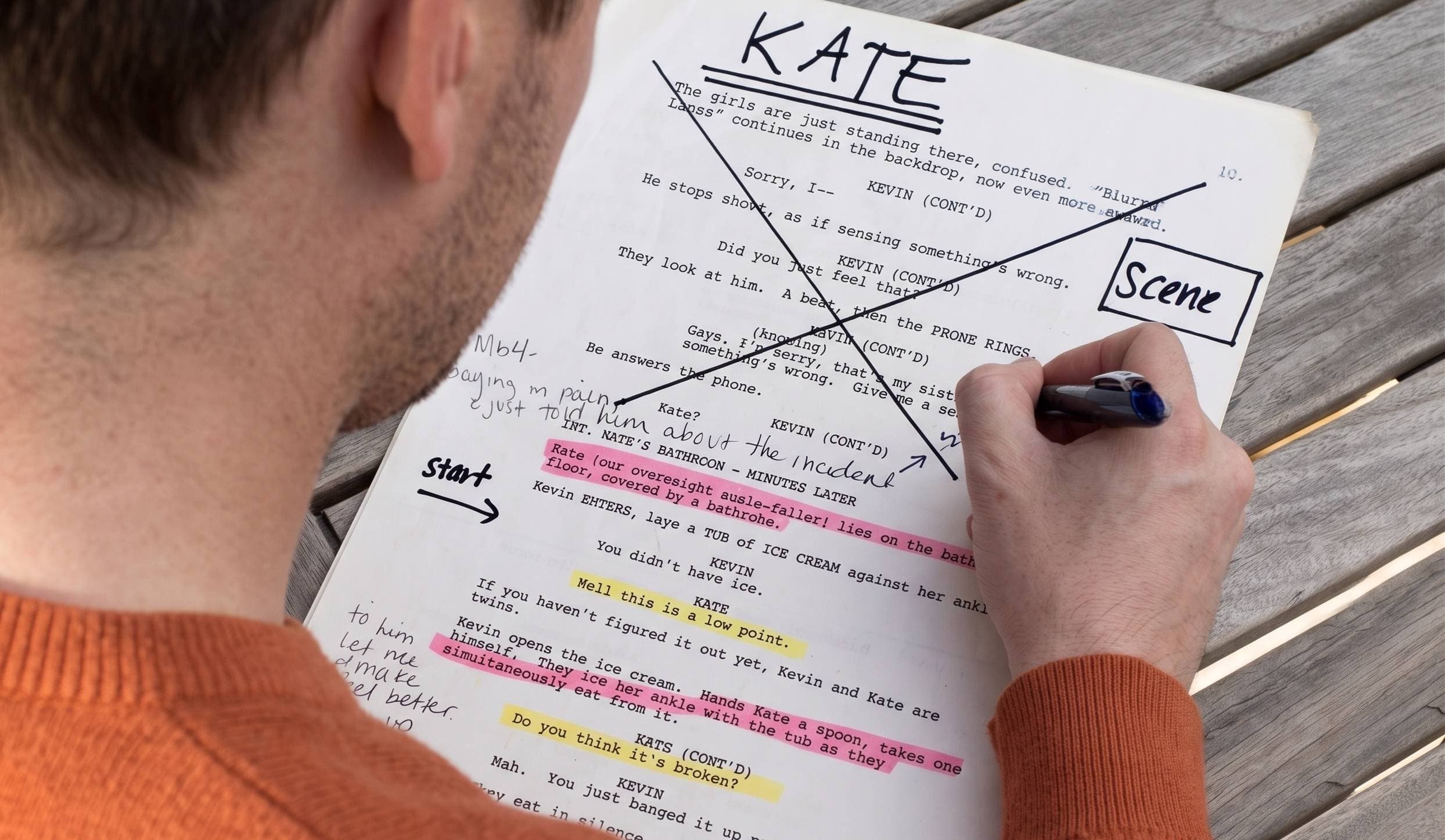
You do what most actors do: read it over and over, record cues into your phone, run it in your head, and hope it sticks.
Sometimes it does. Often it falls apart the moment you need it to work.
Not because you're not capable. Because the method isn't built for performance.

The Science of Learning Lines Quickly
Four principles underpin how we actually lock in memory:
1. Your Brain Remembers What It Retrieves — Not What It Reads
Reading builds familiarity. Recall builds memory. In an audition, you're not reading — you're retrieving under pressure. Your practice needs to reflect that.
2. Context Is Everything
Memory sticks when it's tied to sound, timing, environment, and interaction. This is why scenes are easier to hold than isolated lines.
3. Speaking Out Loud Beats Thinking Quietly
Internal repetition feels productive. But saying it out loud engages more systems at once — and that's what makes it stick.
4. Variation Deepens Recall
Repeat something the same way every time and your brain switches off. Play with intention, pace, and emotion — and memory improves.
How to Actually Learn Lines Fast: A 6-Step Framework

Step 1 — Understand Before You Memorise
Get clear on what your character wants, where the shifts are, and what changes in the scene. A clear thought makes the line easier to recall.
Step 2 — Start Speaking Earlier Than You Think
Don't wait until you feel ready. Say the lines out loud almost immediately — even wrong. Getting comfortable with output builds recall far faster than silent reading.
Step 3 — Remove the Script Early
The longer the script stays in your hand, the more your brain depends on it. Prioritise recall fast. Techniques like line stacking or reducing lines to first letters can help accelerate this.
Step 4 — Train With Cues and Timing
Most actors skip this — and it shows. You need to practise hearing the cue, responding in time, and staying in flow. Without it, you're memorising. Not rehearsing.
Step 5 — Run the Scene as a Scene
Not just your lines. Work with real pacing, emotional shifts, and full runs. This is what prepares you when pressure stacks and you need to try something different.
Step 6 — Add Variation to Lock It In
Change intention. Adjust pace. Play opposite choices. This keeps your brain engaged and strengthens recall under pressure — especially useful for theatre runs.
When You're On Your Own, the Right Tool Makes a Difference
Even if you understand all of this, there's still a gap.
You need cues. You need timing. You need interaction. And most of the time in 2026, that's exactly what working actors don't have.
A really good line-learning app won't replace a scene partner — but it can close that gap in a meaningful way. The difference between a useful tool and a great one is whether it actually mirrors how performance works: cue recognition, real pacing, the ability to hide your lines and retrieve rather than read, and enough flexibility to rehearse the way you want to.
That's what separates drilling words on a page from actually getting performance-ready on your own.
What to Look For in a Line Learning App
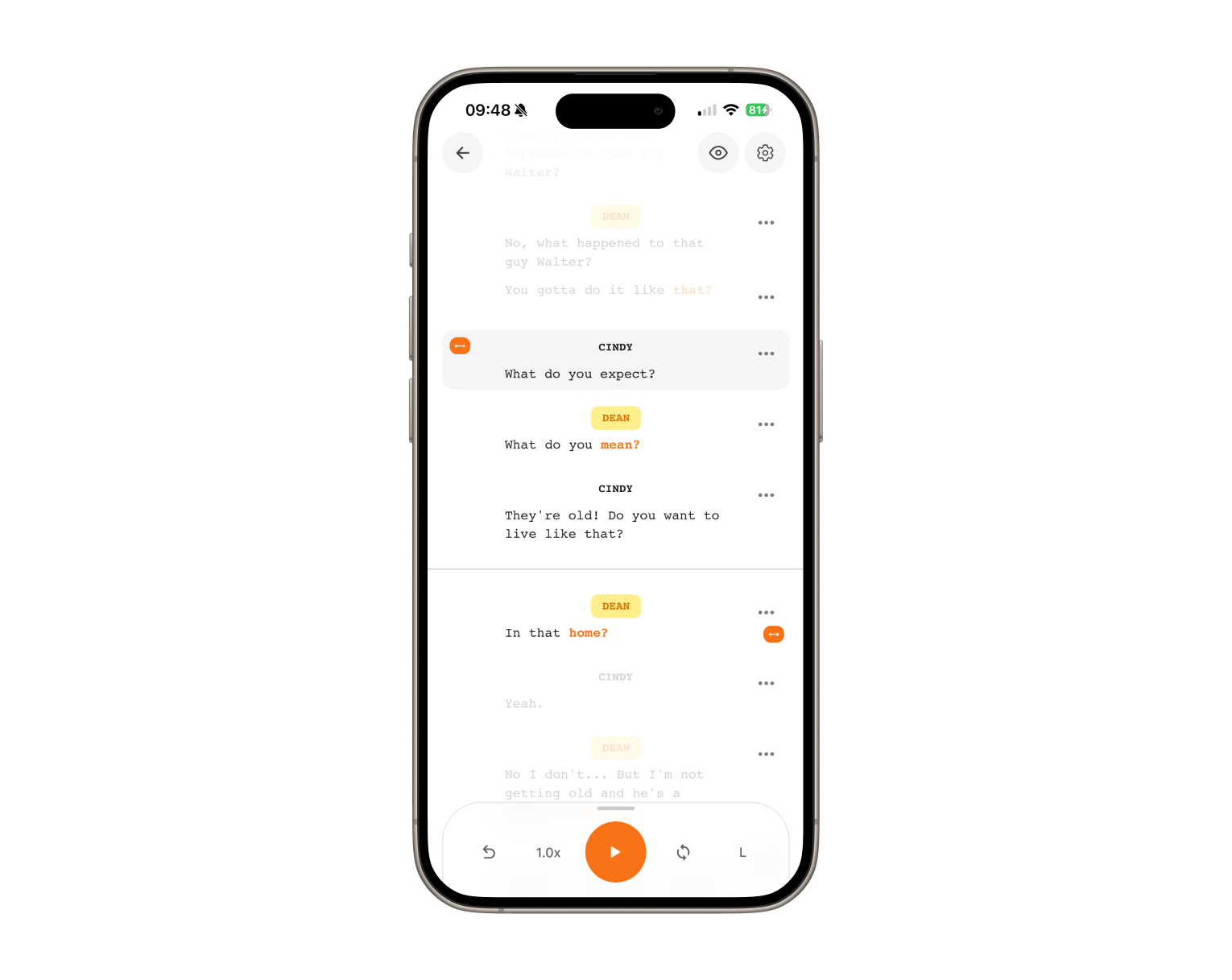
If you're going to use a tool to rehearse, make sure it supports the principles that actually build memory:
Cue-based responses — so you're reacting, not just reciting
Line hiding — to train recall instead of reading along
Scene looping — to drill the moments that aren't sticking
Pacing control — so you can slow down or push yourself
Multi-scene flow — so rehearsal doesn't keep stopping and starting
We built Linus to do exactly this, because we needed it ourselves. But whatever tool works for you, the goal is the same: practise the way you perform, not just the way you read.
The Shift That Changes Everything
No matter how you work, there's always a moment where things click — where you stop thinking about the lines and start living inside them.
That comes from saying it out loud, running it at pace, and playing with it until it feels free.
The moment it moves from internal to external is where it becomes usable.
Final Thought
Learning your lines is part of the job — it's not the job: the job is storytelling, connection * Presence.
The faster the industry moves, the more important it is to protect that part of the process.
If you have an audition this week — trust your process, find a bit more space inside it, and have fun.